Trading: A Three-Step 9:30 AM Opening Strategy for Simpler, Higher-Quality Trades
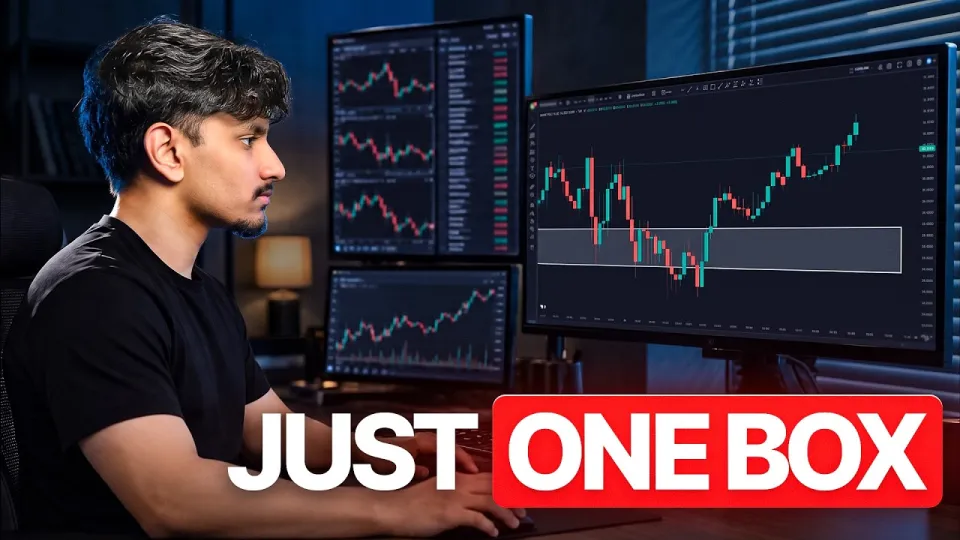
Video: Once You Master This Strategy, Trading Becomes Incredibly Simple
Want articles like this for your own video to promote it on YouTube and Google? Order them through the Telegram bot @sat_sit_bot. It writes articles around your video, embeds the video and publishes them on popular niche websites (no ads). Free trial — 50 articles.
Key takeaways
- The strategy is built around the 9:30 AM New York open and a three-step routine: set up the trade, apply the strategy, execute the entry model.
- Step one is marking premarket highs and lows plus the previous day's high and low before the bell.
- Step two waits for price to sweep a marked level and reclaim it rather than chasing the first breakout candle.
- Step three uses a defined entry, a stop beyond the swept level and a target at the opposite level, which keeps risk small relative to reward.
- The approach is discretionary price action, so results depend on backtesting, a fixed time zone and consistent execution.
Trading becomes simpler when you stop hunting setups all day and instead work one repeatable routine around the 9:30 AM New York open: mark the key levels before the bell, wait for price to sweep one and reclaim it, then enter with a stop just beyond the swept level. That three-step structure — setup, strategy, entry model — is the core of the approach broken down by the Scarface Trades channel in the video "Once You Master This Strategy, Trading Becomes Incredibly Simple", and a free walkthrough of the framework is available through the Simple Trader Playbook course.
The appeal is not a secret indicator. It is the opposite: fewer decisions, fewer charts and a fixed window in which the trader is allowed to act. Most losing traders do the reverse — they scan dozens of tickers from the premarket session to the close, take every candle that looks like a breakout, and have no rule for when a setup is invalid.
Why most traders make trading harder than it needs to be
Most traders fail not because they lack strategies but because they collect too many of them and apply none consistently. A viewer of the channel made the point sharply: when two indicators said sell and a single trend line said buy, the trend line produced a 6R winner — which is an argument for keeping the toolkit small rather than stacking confirmations.
Common symptoms of an overloaded process:
- Ten indicators on one chart, each giving a different signal at the open.
- No predefined levels, so every candle looks tradable.
- Entries taken in the middle of a move, with stops placed by feel rather than by structure.
- Switching instruments every day — one session on TSLA, the next on AMD or AMZN — so no single ticker is ever learned well.
A simple strategy is not a weaker strategy. It is one where the trader can state, before the session starts, exactly what would make a trade valid and exactly what would make it invalid.
Step 1: Setting up the trade before the opening bell
The first step happens before any position is taken: mark the levels that matter on the chart. The working set is small — the premarket high and low, and the previous day's high and previous day's low (PDH and PDL). These are the prices where resting orders and stop clusters tend to sit, so they are where the opening session most often produces a reaction.
A practical routine:
- Open the chart well before 9:30 AM New York time and confirm the platform's time zone matches the session you are trading.
- Mark the premarket high and low as horizontal lines.
- Mark yesterday's high and low.
- Note whether price is above, below or inside that range; a market sitting in the middle of PDH and PDL is the least useful condition, because there is no clear level to react to.
- Pick one or two instruments and keep them for weeks, rather than rotating through a watchlist.
The output of step one is a chart with four or five lines and a clear question: which of these levels will price interact with first?
Step 2: The strategy — sweep, reclaim, then act
The second step is the rule that turns marked levels into a trade idea: wait for price to push through a level, fail to hold beyond it, and come back. In practice this is a sweep of the premarket or prior-day extreme followed by a reclaim of that level, which is where the higher-probability entries tend to appear.
What this filters out is the first breakout candle. Chasing that candle is the most common beginner error, and it is also where the stop has to be widest, because entry is furthest from structure. Waiting for the retest is a patience problem more than a strategy problem: the setup either comes back to the level or it does not, and if it does not, there is no trade.
Two conditions keep the idea honest:
- The sweep should be visible on the chart, not inferred from an indicator.
- The reclaim should happen inside the opening window; if price is still chopping around the level an hour later, the edge has usually gone.
This is discretionary price action, not a mechanical system. The same pattern will look obvious in hindsight and ambiguous in real time, which is exactly why it has to be replayed on historical sessions before it is trusted with size.
Step 3: The entry model and where the stop goes
The third step converts the idea into an order with a defined risk: enter after the reclaim, place the stop just beyond the swept level, and target the opposite marked level. That structure is what makes the risk-to-reward work — the distance from entry to stop is short because entry sits close to the level that just failed.
A workable version of the model:
- Price sweeps the premarket high or low (or PDH/PDL) and closes back inside the range.
- Entry is taken on the reclaim, after the candle closes, not in the middle of it.
- Stop goes beyond the extreme of the sweep, where the setup is proven wrong.
- First target is the opposite level; a partial there and a runner toward the next level is optional.
- If price never reclaims the level, there is no entry — the trade is skipped, not forced.
Because the stop is tight relative to the target, a strategy of this shape can stay profitable with a modest win rate. That is also why position size matters: a stop of a few ticks or cents requires a larger position to produce a meaningful result in currency terms, and the same tight stop makes an oversized position expensive when it is hit.
What the strategy looks like in a live session
A session under this framework is short and mostly observational. Before 9:30 AM the trader marks levels; at the open, price either sweeps one of them or it does not. If a sweep and reclaim occur, one entry is taken with a predefined stop and target. If the market opens in the middle of the range and grinds, the correct action is no action.
The hardest version of this is a choppy open — price poking above and below the same level repeatedly with no clean reclaim. In that condition the rule that saves the account is the one written in advance: one attempt per level, then stop for the session. Backtesting a few dozen choppy opens is more useful than watching another highlight reel, because it shows how often the pattern simply does not appear.
Common questions traders raise about this approach
Several recurring doubts are worth answering directly. The first is the time frame: the setup is described on intraday charts, and traders who are uncomfortable acting on the 1-minute candle can apply the same level logic on the 5-minute chart, accepting fewer signals and wider stops. The second is the market: the framework is level-based, so it transfers to forex pairs such as EUR/USD as long as the trader marks the equivalent session highs and lows and keeps a consistent time zone. The third is instrument choice — concentrating on one or two names rather than rotating across many is generally easier to learn and to review. The fourth is position size: a tight stop means the position must be sized deliberately, not maximized. And the fifth is the honest caveat that any pattern looks cleaner in hindsight; the only way to know whether it fits your execution is to replay past sessions and record the results.
Useful links
- Simple Trader Playbook course (free)
- The Accelerator — private community and live trading
- Scarface Trades on Instagram
- Scarface Trades on X
Bottom line
Trading gets simpler when the decision set shrinks to a handful of marked levels, one pattern and one entry model, all applied inside the 9:30 AM window. The strategy is not magic — it is a filter that removes most of the trades a beginner would otherwise take, and it only pays off if the trader replays it on historical sessions and sizes positions around a tight stop. The breakdown comes from the Scarface Trades channel, whose free Simple Trader Playbook course is the natural next step for anyone who wants the framework written out before risking capital.
Questions & answers
Do I have to trade this on the 1-minute chart?
No. The strategy is built on levels rather than on a specific candle interval, so the same sweep-and-reclaim logic can be applied on the 5-minute chart. The trade-off is fewer signals and wider stops, which changes position sizing but not the underlying idea.
Where exactly is the entry taken — mid-candle or after the close?
After the candle closes and price has reclaimed the swept level. Entering mid-candle means acting before the reclaim is confirmed, which puts the entry further from structure and makes the stop wider than the model intends.
Does this work on forex pairs like EUR/USD?
The framework is level-based, so it transfers to forex if you mark the equivalent session highs and lows and keep a consistent time zone. Spreads and session hours differ from equities, so the levels and the opening window need adjusting to the pair.
Why does position size matter so much with a tight stop?
A stop placed just beyond the swept level is small in price terms, so a meaningful result in currency requires a larger position. That same leverage cuts both ways: an oversized position makes a routine stop-out expensive, which is why size should be calculated from the stop distance rather than set by feel.
Source: Once You Master This Strategy, Trading Becomes Incredibly Simple · Markdown version